
EYFS
Early Years Foundation Stage Framework
EYFS Statutory framework for the early years foundation stage Setting the standards for learning, development and care for children from birth to five.
All children deserve the care and support they need to have the best start in life. Children learn and develop at a faster rate from birth to five years old than at any other time in their lives, so their experiences in early years have a major impact on their future life chances. A secure, safe, and happy childhood is important in its own right. Good parenting and high-quality early learning provide the foundation children need to fulfil their potential.
The EYFS sets the standards that all early years providers must meet to ensure that children learn and develop well and are kept healthy and safe. It promotes teaching and learning to ensure children’s ‘school readiness’ and gives children the right foundation for good future progress through school and life.
The EYFS is about what children learn, as well as how they learn. Effective practice is a mix of different approaches. Children learn through play, by adults modelling, by observing each other and through adult-guided learning.
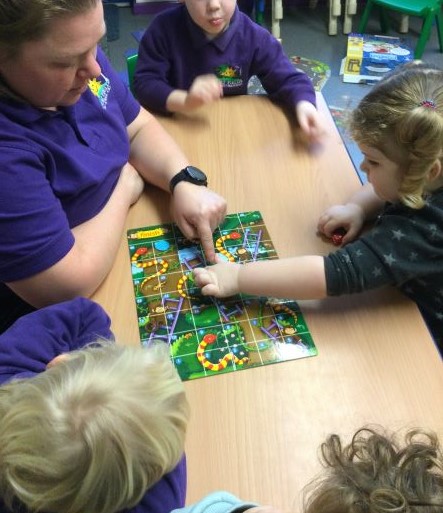
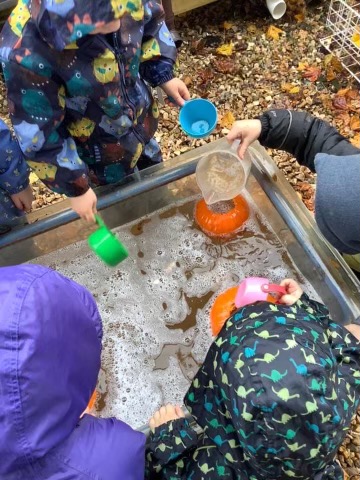
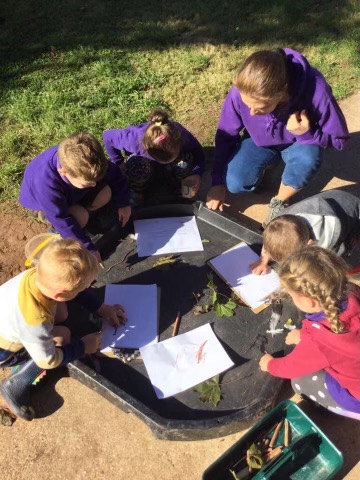
The EYFS seeks to provide:
• Quality and consistency in all early years settings, so that every child makes good progress, and no child gets left behind.
• A secure foundation through planning for the learning and development of each individual child, and assessing and reviewing what they have learned regularly.
• Partnership working between practitioners and with parents and/or carers.
• Equality of opportunity and anti-discriminatory practice, ensuring that every child is included and supported.
Overarching principles
• Every child is a unique child, who is constantly learning and can be resilient, capable, confident, and self-assured.
• Children learn to be strong and independent through positive relationships.
• Children learn and develop well in enabling environments with teaching and support from adults, who respond to their individual interests and needs and help them to build their learning over time. Children benefit from a strong partnership between practitioners and parents and/or carers.
• Importance of learning and development. Children develop and learn at different rates.
The framework covers the education and care of all children,
including children with special educational needs and disabilities (SEND). Every child deserves the best possible start in life and the support that enables them to fulfil their potential. Children develop quickly in the early years and a child’s experiences between birth and age five have a major impact on their future life chances. A secure, safe and happy childhood is important in its own right. Good parenting and high quality early learning together provide the foundation children need to make the most of their abilities and talents as they grow up.
Learning and development
The three prime areas are particularly important for building a foundation for igniting children’s curiosity and enthusiasm for learning, forming relationships and thriving.
These are the prime areas: • communication and language • physical development • personal, social and emotional development
The four specific areas, through which the three prime areas are strengthened and applied.
The specific areas are: • literacy • mathematics • understanding the world • expressive arts and design
The setting follows the guidance on Educational programmes and we provide activities and experiences for children, as set out under each of the areas of learning.
Further information can be found via the following documents.
Development Matters
https://www.gov.uk/government/publications/development-matters–2/development-matters
EYFS
https://assets.publishing.service.gov.uk/media/68c024cb8c6d992f23edd79c/Early_years_foundation_stage_statutory_framework_-_for_group_and_school-based_providers.pdf.pdf
Our Curriculum
We deliver these learning and development opportunities through our continuous provision, (what resources and activities that we have out daily) and with our enhanced provision (what we put out, resources and activities, in addition to support our themes and/or children’s interest).
We observe children in play and talk with parents to understand children’s individual needs, discover their interest and how they learn. This information then shapes our themes and planning.
We then continuously assess, plan, do and review children’s learning and development along with our provision to provide the best opportunities and experiences.
Curriculum goals.
|
Communication and Language To communicate own wants and needs using a wide vocabulary, in sentences, holding a conversation. To actively listen. To understand and respond to instructions and questions. |
|
Physical To have good control over fine and gross motor skills. Beginning to understand healthy daily decisions. To recognise dangers. To independently use the toilet.
|
|
Personal Social and Emotional To build relationships with others. To understand and manage different emotions and feelings. To understand and follow settings Golden Rules.
|
|
Literacy To understand the 5 key concepts of print through books and mark making. Recognise own name and form some recognisable letters when writing.
|
|
Mathematics To have a sound understanding of 5. To develop an understanding of shape, space and measure.
|
|
Understanding the World To be aware of the environment their community and others around the world. To demonstrate their interest and further their own knowledge in our natural world.
|
|
Expressive Arts and Design To use voice, body, musical instruments to make and follow sounds, melodies and songs. To express self, thoughts, ideas, feeling, experiences and share ideas in a variety of play using different resources. |
We understand the steps that children need to take on their learning journey to reach these goals and that all children are individual and will have a different journey to these points, not all achieving the outcome but making progress on the journey.
What to expect when joining us
We make a commitment to all of our families to:
1. Appoint a keyworker prior to the child starting.
2. Arrange a Keyworker meeting, to discover all about the child and to build a relationship with the child and family.
3. By the end of the first half term we arrange a Keyworker meeting with the family to discuss the Childs starting points.
4. We make observations by watching, listening and engaging with the child in play. This is shared with family through Tapestry and handovers to make assessments on the child’s development and the focus for learning.
5. The keyworker will have contact with the family at handovers and parents will receive observations.
6. We will hold parents meetings to share the child’s two year old and school transition report.
7. Your Keyworker will be available, upon request, where possible.
Observation and Assessments
Assessment plays an important part in helping parents, carers and practitioners to recognise children’s progress, understand their needs, and to plan activities and support. Ongoing assessment (also known as formative assessment) is an integral part of the learning and development process. It involves our practitioners knowing the children’s level of achievement and interests, and then shaping teaching and learning experiences for each child reflecting that knowledge. In our interactions with children, practitioners will respond to their own day-to-day observations about children’s progress and observations that parents and carers have shared. Assessment should not entail prolonged breaks from interaction with children, nor require excessive paperwork. When assessing whether an individual child is at the expected level of development, practitioners will draw on their knowledge of the child and their own expert professional judgement and are not required to prove this through collection of physical evidence. Parents and/or carer will be kept up-to-date with their child’s progress and development. Practitioners will address any learning and development needs in partnership with parents and/or carers, and any relevant professionals.
Characteristic of effective teaching and Learning
In planning and guiding what children learn, practitioners must reflect on the different rates at which children are developing and adjust their practice appropriately.
The three characteristics of effective teaching and learning are:
• playing and exploring – children investigate and experience things, and ‘have a go’
• active learning – children concentrate and keep on trying if they encounter difficulties, and enjoy achievements
• creating and thinking critically – children have and develop their own ideas, make links between ideas, and develop strategies for doing things